
The Indeterminate Image
The Birth of Modern Freedom in Pico della Mirandola's "Oration"

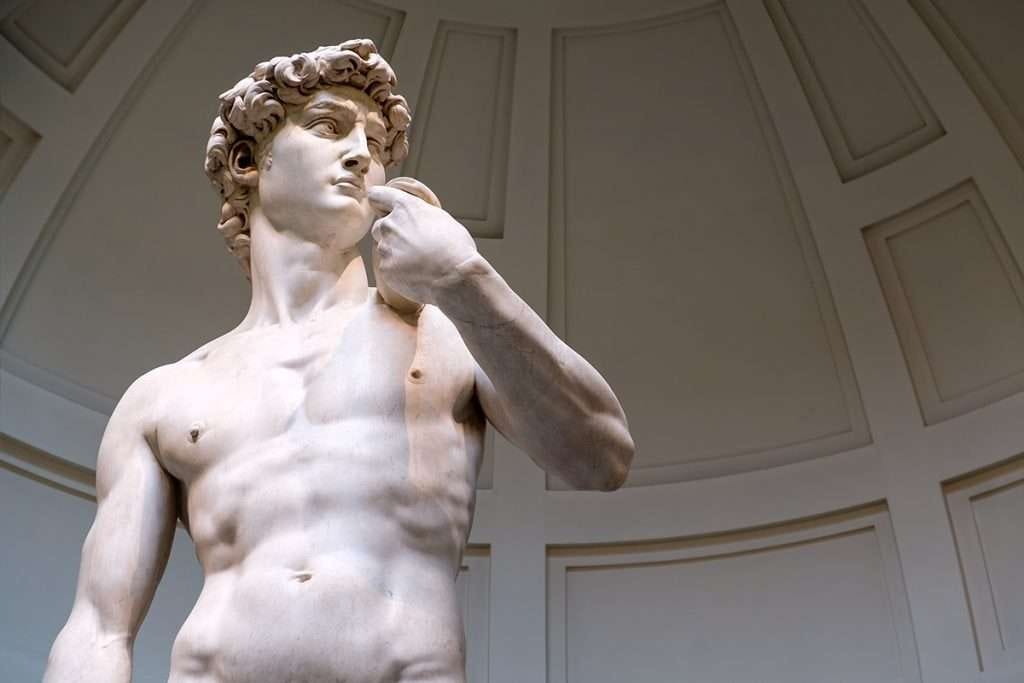
Florence during the age of the Medici must certainly be regarded, by any account, as the scene of one of the great flourishings of the human spirit. The efflorescence of art and literature that emanated from the city during the so-called Quattrocento was owing not only to the relative stability and affluence that the Medici brought to the city (at least in comparison to what preceded it), but to the family’s active support of culture. Lorenzo de Medici in particular seemed to regard his position as singularly devoted to the revival of the classical spirit then unfolding. No leader ever took such a genuine interest in learning and art as Lorenzo, or exerted himself so passionately in their support. He was a man of uncommon energy and brilliance, with a personality marked by an infectious brio; the zest with which he poured himself into philosophical debates or plans for urban splendor attracted many of the leading minds of his period to Florence. The list of prominent artists and writers he supported is impressive: Michelangelo is the best known of these, but he was also patron to the painters Botticelli and Ghirlandaio, the sculptors Verrochio and Pollaiuolo, the poets Poliziano and Pulci.
It was under Lorenzo that the Florentine Academy – started by his grandfather Cosimo – rose to become one of the most important hubs of the new learning in Europe. The philosopher Marsilio Ficino was the recognized head of the Academy, and it was his passionate interest in Plato that determined the tenor of all its activities. Less a school than a loose confederation of scholars sharing similar interests, the Academy brought together many of the leading thinkers of the day for banquets and disputations, where a variety of momentous philosophical topics would be debated vigorously. In these meetings, we can discover all the charm of the Renaissance’s intellectual and cultural ideals. Gathered together in the elegant Villa Medici, situated on a cypress-pillared hill that commanded the countryside outside of Florence, poets and musicians and statesmen and scholars – and, when his duties afforded him some respite, Lorenzo himself – earnestly discussed topics like whether the will took precedence over reason in the exercise of virtue, or whether a life of contemplation was preferable to a life of civic engagement. Their colloquies would stretch well into the night hours and ranged over a host of learned perspectives. In these episodes we see what it means to live the life of the mind, a life dedicated to the pursuit of truth and a reverence for beauty.
One of the most fascinating members of this circle was the precocious young philosopher, Giovanni Pico della Mirandola. Gifted with an uncommon liveliness of mind, and in possession of almost mythical erudition, Pico rocketed to fame at the age of twenty-three, when he proposed to debate representatives of every extant philosophical school. Towards this end, he published nine hundred theses, extrapolated from the writings of every known learned tradition - Hebrew, Islamic, Scholastic, Neo-Platonic, and more. It was his ambition to display the underlying unity in all these traditions, and demonstrate that mankind had only taken so many pathways towards the singular truth of things. He had hoped to conduct this disputation in Rome, with the Pope himself serving as judge, but when Innocent VIII declared multiple theses heretical and ordered all copies of the work to be burned – the first time such a fate befell a printed book – Pico was compelled to flee Italy and was eventually thrown in prison. Released only through the intervention of Lorenzo de’ Medici, he spent the remainder of his life in Florence as one of the leading lights of the Academy. His early death at the age of thirty-one prevented him from fulfilling his towering intellectual ambition, but it is in that ambition itself – in his relentless drive to assimilate all that can be known into a single coherent philosophy – that Pico became an icon of the humanist spirit.
The ”Oration on the Dignity of Man” was intended by Pico to serve as the opening address of his proposed disputation in Rome. It is the work by which he is best known to this day, and is generally regarded as a touchstone of the Renaissance mind. The high regard expressed in this work for the stature and potential of man is typical of a period under the spell of humanist optimism, but what is largely original to Pico in this work is the conception of freedom upon which he rests these exalted claims. Pico rejected the inherited cosmic picture which conceived of man as the apex of creation, at the peak of a hierarchical order to which he nonetheless belonged in some integral fashion (a picture of the world commonly referred to as “the great chain of being”). On Pico’s account, man is rather a being set apart from the created order, a figure of “indeterminate image,” whose claim on our admiration lies in his unrestrained capacity to “fashion (himself) in the form he may prefer.” When the influential medieval theologian Peter Lombard defined free will as “a faculty of reason and will whereby the good is chosen,” he assumed that true freedom was an emanation of faculties inherent to the kind of creatures that we are. The exercise of freedom, on this venerable account, could only mean acting in ways that realized and were in accord with that essential nature. But Pico seems to reject any such definite notion of human nature; man is, to him, a “chameleon” who may “trace for (himself) the lineaments of his own nature.” His capacity for freedom comes prior to any of his other faculties, and alone constitutes the divine spark in him. Thus man is denied an essence, and his freedom is no longer construed as the capacity to realize the potentialities latent in his nature, but simply as the power to “be what he wills to be.”
The core argument of the Oration is powerful, and bears close attention. Pico writes:
God the Father, the Mightiest Architect, had already raised, according to the precepts of His hidden wisdom, this world we see, the cosmic dwelling of divinity, a temple most august. He had already adorned the supercelestial region with Intelligences, infused the heavenly globes with the life of immortal souls and set the fermenting dung-heap of the inferior world teeming with every form of animal life. But when this work was done, the Divine Artificer still longed for some creature which might comprehend the meaning of so vast an achievement, which might be moved with love at its beauty and smitten with awe at its grandeur. When, consequently, all else had been completed (as both Moses and Timaeus testify), in the very last place, He bethought Himself of bringing forth man. Truth was, however, that there remained no archetype according to which He might fashion a new offspring, nor in His treasure-houses the wherewithal to endow a new son with a fitting inheritance, nor any place, among the seats of the universe, where this new creature might dispose himself to contemplate the world. All space was already filled; all things had been distributed in the highest, the middle and the lowest orders.
On this account, man is created last of all creatures, exactly as in Genesis, but only because every other nature had already been made, both angelic and bestial. All the other niches of the created order had been filled. What was needed was a creature who could appreciate the whole in reverence, and who by his comprehension of the whole could assume any station within the created order. Such a creature could have no definite nature, which would place him in one or the other niches, but must remain “indeterminate.” Pico continues:
Still, it was not in the nature of the power of the Father to fail in this last creative élan; nor was it in the nature of that supreme Wisdom to hesitate through lack of counsel in so crucial a matter; nor, finally, in the nature of His beneficent love to compel the creature destined to praise the divine generosity in all other things to find it wanting in himself. At last, the Supreme Maker decreed that this creature, to whom He could give nothing wholly his own, should have a share in the particular endowment of every other creature.
In other words, man has no nature his own, no universal characteristic belonging to him that makes him the kind of creature that he is, in the way the stripes of the tiger make it what it is, or the heliotropism of the daisy makes it what it is. These characteristics belong to the character of these things, defining and limiting them simultaneously. Man alone exists potentially as every other kind of thing, having no definite nature of his own.
The Oration continues:
Taking man, therefore, this creature of indeterminate image, He set him in the middle of the world and thus spoke to him:
``We have given you, O Adam, no visage proper to yourself.
nor endowment properly your own, in order that whatever place, whatever form, whatever gifts you may, with premeditation, select, these same you may have and possess through your own judgement and decision. The nature of all other creatures is defined and restricted within laws which We have laid down; you, by contrast, impeded by no such restrictions, may, by your own free will, to whose custody We have assigned you, trace for yourself the lineaments of your own nature.
Or as we might say today, you can make yourself whatever you want to be. There are no laws or restrictions derived from human nature that would hinder you from doing so.
I have placed you at the very center of the world, so that from that vantage point you may with greater ease glance round about you on all that the world contains. We have made you a creature neither of heaven nor of earth, neither mortal nor immortal, in order that you may, as the free and proud shaper of your own being, fashion yourself in the form you may prefer. It will be in your power to descend to the lower, brutish forms of life; you will be able, through your own decision, to rise again to the superior orders whose life is divine.’‘
Pause here to recollect that Pico is here depicting God speaking to man at the moment of his creation. Note that he doesn’t have God say, “I have made you to aspire after the life of divine creatures, though left you free to assume the forms of bestial ones.” Such an admonition would imply that a man’s descent into violence or concupiscence was not just a rejection of God’s will, but of his own very nature, a rejection of himself, by refusing to be the kind of creature he was made to be. According to Pico’s God, the choice for heaven or earth are both equally expressions of man’s “indeterminate being.” There is no manner in which he can reject his authentic nature, because he has no determinate nature to begin with.
Pico now shifts out of the voice of God, and into a paean of God’s magnanimity expressed in his own voice:
Oh unsurpassed generosity of God the Father, Oh wondrous and unsurpassable felicity of man, to whom it is granted to have what he chooses, to be what he wills to be! The brutes, from the moment of their birth, bring with them, as Lucilius says, ``from their mother’s womb’‘ all that they will ever possess. The highest spiritual beings were, from the very moment of creation, or soon thereafter, fixed in the mode of being which would be theirs through measureless eternities. But upon man, at the moment of his creation, God bestowed seeds pregnant with all possibilities, the germs of every form of life. Whichever of these a man shall cultivate, the same will mature and bear fruit in him. If vegetative, he will become a plant; if sensual, he will become brutish; if rational, he will reveal himself a heavenly being; if intellectual, he will be an angel and the son of God. And if, dissatisfied with the lot of all creatures, he should recollect himself into the center of his own unity, he will there become one spirit with God, in the solitary darkness of the Father, Who is set above all things, himself transcend all creatures.
Notice, man is free to choose any of these stations, but there is none that essentially belongs to him, or to which he essentially belongs. The free and spontaneous will that alone constitutes his essence is equally realized in the exercise of his sensual or intellectual capacities.
There is an unmistakable shift that occurs a bit later in the argument:
If you see a man dedicated to his stomach, crawling on the ground, you see a plant and not a man; or if you see a man bedazzled by the empty forms of the imagination, as by the wiles of Calypso, and through their alluring solicitations made a slave to his own senses, you see a brute and not a man. If, however, you see a philosopher, judging and distinguishing all things according to the rule of reason, him shall you hold in veneration, for he is a creature of heaven and not of earth; if, finally, a pure contemplator, unmindful of the body, wholly withdrawn into the inner chambers of the mind, here indeed is neither a creature of earth nor a heavenly creature, but some higher divinity, clothed in human flesh….
For the first time, Pico suggests that the choice to embrace one’s vegetative or sensual inclinations, at the expense of the rational, represents a misuse of his freedom. But such a judgment entails an ability to evaluate different exercises of freedom, and that in turn supposes that there is a principle in man higher than his freedom – to which his freedom is answerable – which does that evaluating, a capacity to distinguish good exercises of freedom from bad. Customarily, that faculty had been labeled the rational faculty, and its intrinsic status in man was taken to be the basis for regarding him as “the rational animal.” But Pico exalted mankind precisely on account of the fact that he had no certain essence, that he was an indeterminate chameleon. I do not know how else to read this inconsistency other than that he shied away from the implications of his own idea, from the idea that a man freely willing the life of a beast is in some way on par with a man freely willing the lives of the angels.
That ambivalence continues to mark the rest of his argument:
But what is the purpose of all this? That we may understand --- since we have been born into this condition of being what we choose to be --- that we ought to be sure above all else that it may never be said against us that, born to a high position, we failed to appreciate it, but fell instead to the estate of brutes and uncomprehending beasts of burden; and that the saying of Aspah the Prophet, ``You are all Gods and sons of the Most High,’‘ might rather be true; and finally that we may not, through abuse of the generosity of a most indulgent Father, pervert the free option which he has given us from a saving to a damning gift. Let a certain saving ambition invade our souls so that, impatient of mediocrity, we pant after the highest things
Notice, he claims here that man was born to “a high position,” though he has already claimed that man was born to no position at all. Likewise, he admonishes us to pant after “the highest things,” but why should we specially desire anything that does not in some unique way satisfy our nature. This entire passage in the Oration provides us with an extremely interesting example of a lively, profoundly erudite mind wrestling with the ramifications of its own conceptions. Pico clearly is not willing to follow all of the corollaries unwinding from his radical understanding of human freedom to their last stages. He clearly wants to say that the philosopher is a preferable figure to the hedonist, that he in fact fulfils certain potentialities in man’s nature that ought to be fulfilled, and commended when fulfilled. Ultimately, he falls back onto something like a more traditional theological framework, wherein man stands as the imago Dei, his intrinsically rational nature reflecting the intelligibility of his divine maker. Nonetheless, the radical conception of freedom that Pico articulates so powerfully in the earlier passages of the Oration is the one that will persist in Western culture; subsequent generations will in fact have no such hesitancy to trace its corollaries to their conclusion.
What Pico is really wrestling with here is the legacy of medieval scholasticism, and the unsettled debates between nominalism and realism that marked its concluding era. Michael Gillespie, in the Theological Origins of Modernity, claimed that nominalism, or the denial of the reality of universal concepts - the denial that universals are anything other than useful man-made instruments - had become more or less the official philosophical school in most of the universities outside of Italy, and we know that Pico spent a brief time studying at the Sorbonne. Yet whether or not he was directly influenced by his time there, he had clearly absorbed all of the learning of his era, and clearly was attuned to the questions at issue in the great nominalist revolution. Of particular note is the fact that the formulation of a rigorously nominalist understanding of human nature, for which William of Ockham is generally credited or blamed, introduced an entirely new conception of human freedom. Servais Pinckaers, in his book The Sources of Christian Ethics, traces the lineaments of this re-conception. In the philosophy of a figure like Aquinas, whom he takes as a representative of the realist account of human nature, freedom is a consequence or emanation of man’s rational and volitional faculties, and their intrinsic, or natural, inclinations towards truth and goodness, respectively. Pinckaers writes:
St. Thomas explained freedom as a faculty proceeding from reason and will, which unite to make the act of choice. This act of choice is thus formed by practical judgment and willing. For him, free will was not a prime or originating faculty, it presupposed intelligence and will. It was rooted, therefore, in the inclinations to truth and goodness that constituted these faculties. Ockham on the contrary maintained that free will preceded reason and will in such a way as to move them to their acts. “For I can freely choose,” he said, “To know or not to know, to will or not to will.”
On Ockham’s account, human freedom does not proceed from a particular configuration of man’s nature; it is not a consequence of any essential trait. Rather, it is the primary trait about him – exactly as Pico puts it, man is the “indeterminate image” – and that first fact of freedom shapes and determines everything else about him, including his exercise of reason and will. Pinckaers continues:
In view of this experience, how could freedom be described? Freedom lay entirely in the power of the will to choose between contraries, and this power resided in the will alone. It was the power to opt for the yes or the no, to choose between what reason dictated and its contrary, between willing and not willing, acting and not acting, between what the law prescribed and its contrary. Thus freedom consisted in an indetermination or a radical indifference in the will regarding contraries. As Gabriel Biel was to say, freedom was essentially the power to move in two opposite directions. It was qualified by an indifference to the opposites.
The resonance of this passage with the above selections from the Oration are evident enough. As Pico wrote: “whatever place, whatever form, whatever gifts you may, with premeditation, select, these same you may have and possess through your own judgement and decision.” Such an act of selection clearly entails the possibility of choosing opposites, as Pico explicitly frames the situation confronting man, a choice between being mortal and immortal, heaven and earth. But it is marked by an indifference to the opposites – in a sense, whether man chooses heaven or earth, he is still acting in accord with his nature, since the very first thing in his nature is the power of choosing, is freedom. And thus we have the advent of what Pinckaers labels “the freedom of indifference,” a conception of freedom entirely unconditioned by any prior conception of human nature, or its intrinsic, essential inclinations. Thus Pinckaers writes:
Break with natural inclinations – The most decisive point of Ockham’s critique of St. Thomas’ teaching on freedom was the breach between freedom and the natural inclinations, which were rejected from the essential core of freedom. According ot St. Thomas, freedom was rooted in the soul’s spontaneous inclinations to the true and the good. His entire moral doctrine was based on the natural human disposition toward beatitude and the perfection of good, as to an ultimate end. A person can never renounce this natural order of things, nor be prevented from desiring it. For Ockham, the state of being ordered to happiness, however natural and general, was subject to the free and contingent choice of human freedom. This meant that I could freely choose or refuse happiness, either in particular matters presented to me or in general, in the very desire which attracted me to it, owing to the radical indifference of my freedom.
That radical indifference of freedom to the ends of its exercise is the new and characteristic feature of the nominalist account of human freedom. That is the very note sounded in Pico’s celebration of the “chameleon” who is distinguished from the entirety of nature by having no nature, by having an unfettered capacity to “trace the lineaments of his own nature.” Of course, no one ever doubted that a man was capable of choosing extremely divergent courses of action, courses of action that might be radically virtuous or radically vicious. But the older, realist schemata, would have dictated that the free election of virtuous courses of action emerges from a prior inclination in man’s nature towards goodness; thus he is freely choosing to be what he is destined to be, or exercising what Pinckaers called a “freedom for excellence.” And it would have told us that the election of vicious courses of action entailed a rejection of our own nature, binding us at last to sins that are foreign to our intrinsic inclinations towards truth and goodness, thus destroying its “free” character in the end. There is no way of understanding evil actions as freely willed, on this account; rather, it is a parody of freedom at work, or what we might call license. It is an unfortunate consequence of the nominalist account of human nature that it makes it impossible to distinguish freedom from license.
And that is precisely where we find ourselves at this stage of cultural development, without the capacity to distinguish between freedom and license. There is no course of action in our day and age, no matter how undignified or destructive, no policy, no manner of life, that does not ultimately justify itself in the judgment of the public on the grounds of freedom. Across political divides, regardless of partisan affiliations, the final and dispositive assertion that all people make to justify their actions is that those actions are a manifestation of freedom, and what they mean by freedom is precisely the freedom of indifference, a freedom that is a first fact about mankind, preceding any rational inclinations essential to his nature. Thus every one of our public debates is regulated by the supremacy of a concept that has no necessary relation to what is good and what is true. This one fact occasions no end of disorder and futility in our public discourse. It turns out that the shadows of the unresolved questions of the late Middle Ages hang as thickly over our own age as over the burgeoning dawn of the Renaissance.